Discovering Serengeti Weather: Seasons and Wildlife
Discover Serengeti Weather and how it shapes the wildlife and landscapes of this iconic national park. Plan your visit around its seasonal patterns.
Access Your PDF Instantly
Serengeti National Park >> Serengeti Weather

Book Now: Serengeti Weather
WhatsApp: +255 747 989 416
Email: exploreafrica024@gmail.com
Make A Quote
Serengeti Weather
Serengeti Weather is the defining force behind the park’s spectacular scenery and thriving ecosystems. Located in northern Tanzania, the Serengeti experiences a tropical savanna climate that shapes its diverse wildlife, from its vast grasslands to its rich riverine forests. Serengeti Weather plays a crucial role in the timing of the Great Migration and the life cycles of its many species.
This guide explores the unique characteristics of Serengeti Weather, the best times to visit, and how weather patterns influence safaris and wildlife encounters.
What Is Serengeti Weather?
Serengeti Weather is characterized by two main seasons: the wet season and the dry season. Unlike many parts of the world, the Serengeti does not experience four distinct seasons. Instead, its weather revolves around rainfall patterns, which determine vegetation growth, wildlife movement, and visitor experiences.
With temperatures averaging between 20–30°C (68–86°F), Serengeti Weather is warm and pleasant year-round. However, rainfall is the critical factor that transforms the landscape and dictates the behavior of its iconic animals.
Seasons of Serengeti Weather
1. The Wet Season (November to May)
The wet season in the Serengeti is divided into two periods: the short rains (November to December) and the long rains (March to May). During this time, the landscape bursts into life with lush green grasslands and blooming flowers.
Short Rains: These are brief and scattered showers that refresh the vegetation without making the terrain overly muddy. Wildlife is still easily visible during this period.
Long Rains: This is the heaviest rainy period, with continuous downpours that transform the plains into a verdant paradise. The Serengeti becomes quieter with fewer tourists, offering a more serene experience.
The wet season is also the calving period for wildebeests, zebras, and gazelles. Visitors can witness thousands of newborn animals, making it an excellent time for photographers and wildlife enthusiasts. Birdwatching is particularly rewarding as migratory species flock to the park.
2. The Dry Season (June to October)
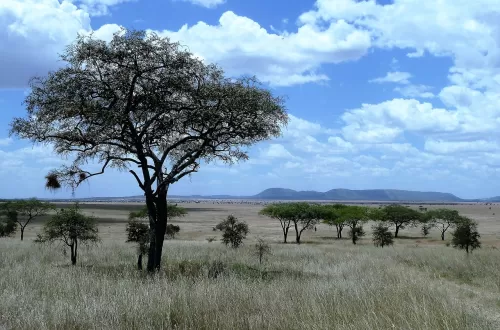
The dry season is defined by sunny skies, little to no rain, and golden grasslands. It is the most popular time for visitors due to the abundance of wildlife congregating around water sources.
Wildlife is highly concentrated, making animal sightings more predictable.
The Serengeti’s rivers and waterholes become lifelines for animals like elephants, giraffes, and big cats.
The dry season is also the best time to witness predator-prey interactions as lions, leopards, and cheetahs take advantage of the vulnerable prey gathering near water.
How Serengeti Weather Influences the Great Migration
The Great Migration, one of the Serengeti’s most iconic spectacles, is heavily influenced by Serengeti Weather. The movement of over 1.5 million wildebeests, zebras, and gazelles across the Serengeti and into the Masai Mara is driven by the availability of water and grazing.
Wet Season: The herds disperse across the southern plains, where fresh grass is abundant.
Dry Season: As water sources dry up, the herds move northward, crossing the Grumeti River and eventually braving the crocodile-infested Mara River.
Timing your visit around Serengeti Weather ensures you can witness specific stages of the Great Migration, from calving to dramatic river crossings.
Planning Your Safari Around Serengeti Weather
Serengeti Weather determines the best time for different safari experiences.
For Wildlife Viewing:
The dry season (June to October) offers unparalleled opportunities to see large concentrations of animals, especially around waterholes.
For Lush Landscapes and Birdwatching:
The wet season (November to May) showcases the Serengeti in its most vibrant state. Migratory birds add splashes of color to the scenery, making this a prime time for birdwatching enthusiasts.
For Photography:
Both seasons offer unique opportunities for photography. The golden hues of the dry season create stunning backdrops for wildlife shots, while the wet season’s dramatic skies and greenery enhance landscape photography.
Challenges and Tips for Visiting During Serengeti Weather
Wet Season Challenges:
Roads may become muddy and difficult to navigate, especially during the long rains.
Some camps and lodges close during this period.
Tip: Choose for lodges or camps that remain open year-round and offer guided tours with experienced drivers familiar with the terrain.
Dry Season Challenges:
Popular sites and lodges can become crowded.
Wildlife may be less evenly distributed, concentrated near water sources.
Tip: Book your safari in advance and consider visiting lesser-known areas of the park for a more private experience.
Serengeti Safaris and Tour Packages
We offer Serengeti Safaris and Tour Packages tailored to suit the best Serengeti Weather for your interests. Whether you prefer the lush vibrancy of the wet season or the golden expanses of the dry season, our safaris ensure you experience the Serengeti at its most breathtaking.
Our packages include expert guides, comfortable accommodations, and customized itineraries to help you explore the Serengeti and other national parks in Tanzania.
The Magic of Serengeti Weather
Serengeti Weather is a vital element that shapes the park’s ecosystem and visitor experiences. Its distinct wet and dry seasons create dynamic landscapes that support an incredible variety of wildlife. By discovering Serengeti Weather, you can plan a safari that aligns with your interests, whether it’s witnessing the Great Migration, photographing dramatic sunsets, or enjoying tranquil birdwatching.
Explore the Serengeti and let its weather guide you through one of the world’s most iconic natural wonders.
Serengeti Weather - Related Pages

Serengeti Leopard Spots: Beauty of the Stealthy Predator
Discover Serengeti Leopard Spots, where the elusive and majestic leopards thrive in their natural ha... Explore more about Serengeti Leopard Spots

Serengeti Cheetah Sightings: Witness the Swiftest Predator
Discover unforgettable Serengeti Cheetah Sightings, where these agile predators showcase their speed... Explore more about Serengeti Cheetah Sightings

Serengeti Lion Safari: Exploring the the King of Beasts
Experience the thrill of a Serengeti Lion Safari, where you can witness majestic lions in their natu... Explore more about Serengeti Lion Safari

Serengeti Photography: Capturing the Wild Heart of Africa
Serengeti photography offers breathtaking opportunities to capture iconic wildlife, vast landscapes,... Explore more about Serengeti Photography

Predator-Prey Serengeti: Balance of Life and Survival
Discover the predator-prey Serengeti dynamics, where lions, cheetahs, and leopards hunt wildebeest, ... Explore more about Predator-Prey Serengeti

River Crossings Serengeti: Wildlife Spectacle Like No Other
Discover the best river crossings in Serengeti, where wildebeest and zebras brave the Mara and Grume... Explore more about River Crossings Serengeti

Serengeti Landscape: Nature’s Masterpiece in Tanzania
Discover the breathtaking Serengeti Landscape, a vast expanse of endless plains, vibrant ecosystems,... Explore more about Serengeti Landscape

Serengeti Bird Watching: Exploring Tanzania’s Avian Paradise
Discover Serengeti Bird Watching, a paradise for bird lovers with over 500 species to spot, from vib... Explore more about Serengeti Bird Watching

Serengeti Bush Adventure: Ultimate Wilderness Experience
Serengeti Bush Adventure offers the best wildlife experiences, including bush lunches with armed ran... Explore more about Serengeti Bush Adventure
Serengeti Conservation: Preserving a Global Treasure
Serengeti Conservation ensures the protection of wildlife, ecosystems, and cultural heritage, foster... Explore more about Serengeti Conservation